THE COMMUNITY OF FANDOMS
- Diana Castillo
- May 25
- 6 min read

I was recently seeing all the discourse surrounding the BTS Army fandom, since the group’s presentation in Mexico City. To be honest, as a Mexican, it is not surprising to me when fans are so devoted and passionate, but I have to say, this event really stood out to me. It is inspiring seeing so many people come together for one shared passion, it’s deeply moving to witness the love and devotion that surrounds the Army community. I am not a BTS fan, but I adore K-pop and boy bands so honestly BTS is something I can understand the love for.
In today’s blog, I want to go in depth about all the sentiments surrounding becoming part of a fandom and the communities created within. What being part of a fandom actually feels like from the inside, the economics behind it that nobody talks about, and the very specific kind of misogyny that gets directed at fangirls that I am truly tired of ignoring.
CONTEXT: THE BTS MEXICO CITY PHENOMENON
If you are not familiar with the recent BTS appearance in Mexico City, let me tell you about it. BTS is back with their “ARIRANG” tour, promoting their new album and their comeback after years in hiatus. The tickets were nearly impossible to get your hands on, and millions of fans couldn’t even get the opportunity to see them live. One of their most recent stops was in Mexico City, and the response was more than anyone could have expected.

Mexican Army received BTS with open arms and their heart on their sleeve. From a public appearance in the National Palace alongside the Mexican President to selling out 3 nights in one of the biggest stadiums in Mexico (Foro Sol/Estadio GNP Seguros) with a capacity of 65,000 people, BTS came to rule. Armys were one of the loudest crowds I’ve ever seen (online), and even Armys that didn’t get tickets, lined up outside the stadium, surpassing 100,000 per night.
I watched all of this online and felt it in a way that is hard to explain unless you have experienced it yourself. I am not an ARMY. But I understood every single person standing outside that stadium, because I have been that person... Maybe I have not been outside a sold out stadium for BTS, but I know that feeling of needing to show up for something bigger than yourself, for a community that you chose and it reciprocates it.
YES, I AM A FANGIRL

We know that by now, but do people really understand what this encompasses? Since I was a little girl (around 6 years old) I started getting infatuated by pop superstars like Hannah Montana, The Jonas Brothers, Big Time Rush and obviously One Direction. Being part of a fandom really catered my personality, and made me the person I am today. I am very loud and proud about my devotion and love to both the arts and the media (reason why I started my blog). People in high school used to know me as the “Ticketmaster Girl”, cause I was getting concert tickets all the time in class, and you could trust I will always get them.
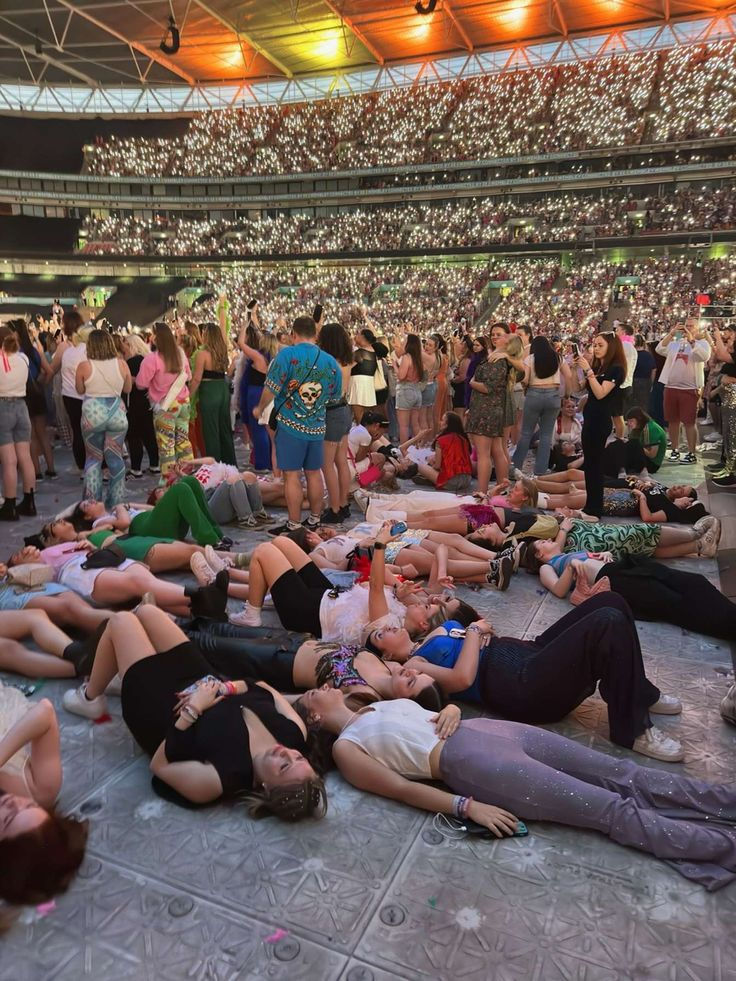
I full heartedly believe that fandom culture has created a sense of community to all types of people, joined by the same passionate and indifferent to background, race and gender. I’m also very proud to admit, I have made some of my closest friendships through Twitter (now X) and fan accounts and group chats that started as strangers sharing a love for the same artists. I have met some of those people in real life. People I never would have found otherwise, from completely different countries and backgrounds, brought together by the same thing.
WHAT BEING PART OF A FANDOM MEANS
Being part of a fandom is more than showing up to your favourite artist’s gig and interacting with their content, fandoms do much more than that. Listening parties, massive streaming, charting, social media relevance and traction, these are all doings of fandoms. Being a fangirl is much more than enjoying the music for me.
The type of community you feel from fandoms are pretty different from any other one I’ve experienced before. I will lead with the example of “Directioners” (One Direction fandom), this is a community that has existed for over a decade now, and a big majority of the “OG” fans are still actively part of it. This is a community led by familiarity, nostalgia, love for the boys and an unexplainable connection to the members as individuals. This is a very specific fandom given that every single one the boys went forward after One Direction, to have successful solo careers. Then, Liam Payne’s tragic passing happened...

I don’t think I can explain what that felt like inside the fandom without it sounding dramatic to someone on the outside. Directioners grieved Liam the way you grieve someone who was part of your life, like your own environment. These boys were there during whole childhoods and adolescences for millions of people. You grew up with them, and when Liam died, it was not just the loss of a celebrity. It was the loss of something that had somehow made you who you are. I think a lot of people who have never been part of a fandom genuinely do not understand how deep that connection goes, and that is okay.

Fans are a family they built for themselves, and even with their differences, they still support each other. For some, this is their chosen family where they escape from reality. No, it’s not all rainbows and butterflies, some fans can be too intense and can even harm others, this definitely doesn’t pass unseen. Some fans can be intense in ways that cross lines, and that does not go unseen. The toxicity that sometimes exists within fan communities, between different fandoms or even within the same one, is real and worth acknowledging. Yet, I find that fandoms are beautiful spaces for people to celebrate a similar love.
THE ECONOMICS OF FANDOMS

Safe to say, fandoms are not the only ones getting benefited by their acts, artists and music labels are the main profiters of this. From events, concerts, merch and streaming, music labels gain an insane amount of income, profiting off fans. Reason why most K-pop albums and collectibles are a huge part of the market, fans want tangible things that represent them.
A successful music career is held up in large part by fans doing unpaid labour for the artists and labels they love. K-pop is probably the most clear example of this. This industry created so much money grabs like fan collectibles, multiple album versions with different photocards, limited edition merch drops, fan membership clubs (subscription based), etc. Fans are not just consuming the product, they are literally increasing the label’s profits.

Have I been actively participating in this? Yes, absolutely. This is not necessarily a bad thing, I personally see it more as a win-win situation, I genuinely believe it can be fair when done with integrity and artists, and labels treat their fans as humans and not money fountains.
THE MISOGYNY IN MEDIA
Media also loves to depict fan girls especially, as obsessed and boy crazy. Which is most definitely not true and is just a deep misogynistic perspective. You can see this even in very early fandoms like the “Beatlemania” . The media presents it and has always presented it as: these girls are crazy, their passion is embarrassing, their devotion is something extreme. Then, on the other hand, you have football fans who paint their faces and scream for 90 minutes considered “passionate”. Fangirls who do the same thing at a concert are obsessed. The double standard is so clear.

This all stems from disliking what women do and classifying them as invalid. Do they even know that hard and soft that being part of a fandom involves? Social media managing, even planners, leadership, community creation, teamwork, budgeting, travel experience, they all (or most of them) have these skills. I picked up so many skills through fandoms, that I now use professionally and academically. The ability to build and manage online communities, to write critically about media and culture, to understand how marketing and branding work from a fan’s perspective first. None of that was learnt in college, it is literally coming from a fangirl. The overlooking of fandom culture and classifying it to just “obsession” is not just wrong, it is dismissing those who have developed genuine skills and built genuine communities through it.
FINAL THOUGHTS
I started this blog post because watching the BTS Mexico City videos online made me feel so related and emotional. That specific kind of recognition you feel when you see other people doing something you understand completely, even if the artist is different, even if the fandom is different.

Fandom is not just about the artist, at least not always. It is about finding your people, building something together, and having a space where the things you care about deeply are taken seriously by the people around you. It is about choosing a family for yourself out of strangers who love the same things you love.
Yes, the industry profits from it, and yes, some of it is complicated, especially when fans take it too far. But, I am also a girl who grew up as a Directioner and made some of the most important friendships of her life through a fandom, and I will defend that.


Comments